


Send Message
Privacy statement: Your privacy is very important to Us. Our company promises not to disclose your personal information to any external company with out your explicit permission.


Powder metallurgy is a manufacturing process that transforms metal powders into high-performance components through compacting and sintering. For buyers sourcing precision parts, this method offers significant advantages in material efficiency, cost-effectiveness, and the ability to produce complex geometries that traditional machining cannot achieve economically.
At Dongguan Shengpeng Precision Technology Co., Ltd., we combine powder metallurgy expertise with advanced CNC machining capabilities to deliver complete solutions. Our facility processes aluminum, stainless steel, titanium, brass, and engineering plastics using state-of-the-art equipment including 14 CNC lathes and five-axis machining centers.
The powder metallurgy process enables near-net-shape production, reducing material waste by up to 95% compared to conventional methods. This translates directly to lower unit costs for volume orders while maintaining tight tolerances down to ±0.01mm for critical applications.
Our powder metallurgy production follows rigorous quality protocols backed by ISO 9001 certification and comprehensive testing procedures. Every batch undergoes dimensional verification, material analysis, and surface inspection before shipment.
ISO 9001:2015 certified with full traceability from raw material to finished component. Our digital quality tracking system monitors every production step for complete process transparency.
Coordinate measuring machines (CMM), hardness testers, salt spray chambers, and optical comparators ensure every part meets specifications. We maintain 4 dedicated QA/QC inspectors for continuous monitoring.
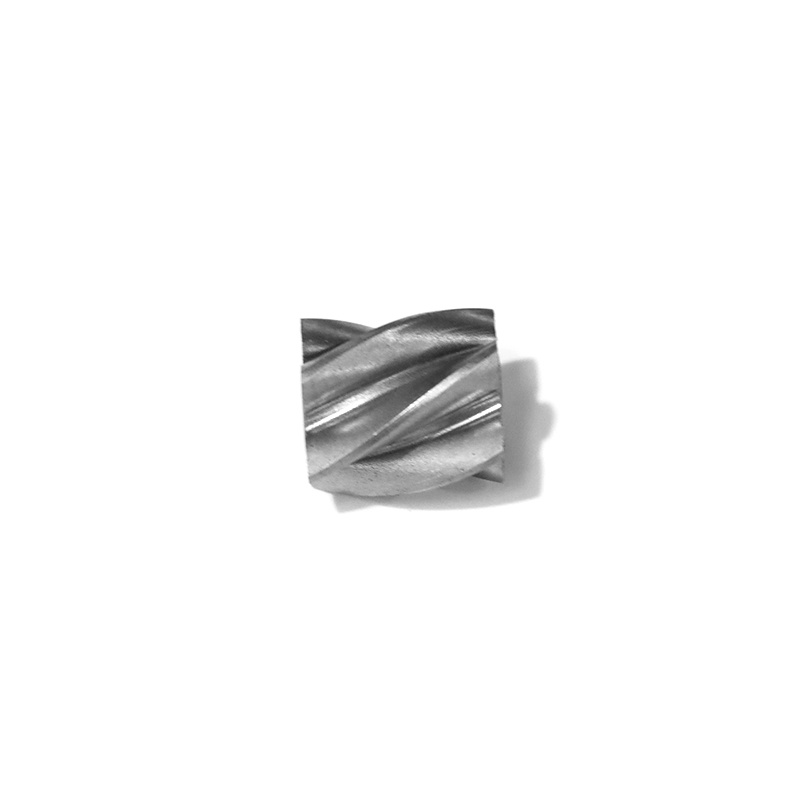
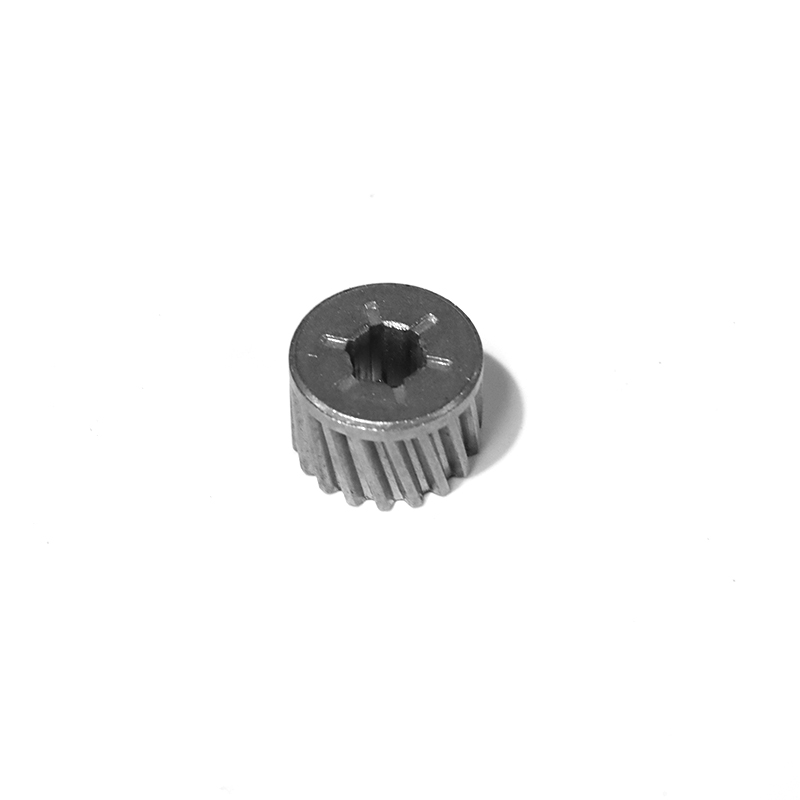
Selecting the right powder metallurgy partner requires evaluating technical capability, production capacity, quality systems, and supply chain reliability. Look for suppliers who offer integrated services from design consultation through final delivery.
Choose a supplier with experienced engineers who can provide DFM analysis early in your project. Our team of 3 undergraduate-degree R&D engineers helps optimize designs for powder metallurgy production, reducing development time and cost.
Verify monthly output capacity matches your volume requirements. We maintain stable production of 30,000-40,000 pieces monthly with flexible MOQ starting at just 1 piece for prototype and low-volume orders.
Ensure your supplier holds relevant certifications for your target market. We carry CE, RoHS, EU 2015/863, and ISO 9001 certifications covering European, North American, and Asian regulatory requirements.
Confirm the supplier works with your required materials — aluminum, stainless steel, titanium, brass, or engineering plastics. Verify material certificates are provided with each order.
Review whether the supplier can meet your dimensional tolerance requirements. Standard powder metallurgy achieves ±0.1mm; precision operations reach ±0.01mm with post-processing.
Check for ISO 9001 certification and inspect their quality control procedures. Request sample reports showing CMM measurements and material test results.
Confirm bulk order delivery windows match your production schedule. Typical lead times range from 7-25 days depending on complexity and quantity requirements.
Determine if the supplier offers secondary operations like anodizing, electroplating, polishing, and CNC finishing for achieving tighter tolerances and superior surface finishes.
Ensure the supplier provides clear warranty terms and remanufacturing guarantees for production-related defects. Responsive communication channels are essential for ongoing projects.
When evaluating powder metallurgy manufacturers, prioritize companies with proven track records across multiple industries. The following criteria help identify suppliers capable of meeting demanding application requirements:
Suppliers offering powder metallurgy alongside CNC machining, sheet metal fabrication, and surface treatments reduce supply chain complexity. Single-source production simplifies logistics and ensures consistent quality across all processes.
Look for suppliers with documented success in your industry sector. Medical device, aerospace, automotive, and robotics applications each have unique requirements for materials, tolerances, and surface treatments.
Suppliers with established export operations understand international shipping, documentation, and compliance requirements. Six years of export experience serving North America, South America, and Eastern Europe indicates reliable global logistics.
Powder metallurgy components serve diverse industrial sectors where complex geometries, material efficiency, and consistent quality are critical. Understanding application-specific requirements helps buyers specify the right manufacturing approach.
Engine components, transmission gears, sensor housings, and structural parts benefit from powder metallurgy's ability to produce dense, wear-resistant components at competitive volumes. Our automotive sensor housing project achieved 99.2% on-time delivery for over 500,000 units.
Biocompatible components requiring mirror-polished surfaces (Ra≤0.1μm) and precise dimensional control. Powder metallurgy enables production of surgical instrument parts, implant components, and diagnostic equipment elements with strict regulatory compliance.
High-strength titanium alloy components and complex geometric structures processed via five-axis machining combined with powder metallurgy preforms. Tolerances as tight as ±0.01mm meet aerospace qualification standards.
Gears, bearings, bushings, and wear plates manufactured from powdered metals offer self-lubricating properties and extended service life. These components reduce maintenance intervals and total cost of ownership for end users.
Precision joints, actuators, and structural frames require lightweight yet strong components. Aluminum and titanium powder metallurgy parts enable higher acceleration rates and energy efficiency in robotic systems.
Small mechanical components for appliances, power tools, and electronic devices leverage powder metallurgy for cost-effective mass production while maintaining aesthetic surface quality through integrated finishing processes.
We support low MOQ starting at just 1 piece for prototyping and validation orders. For volume production, our setup allows efficient runs at any scale. This flexibility lets you validate designs and quality before committing to large quantities, reducing your procurement risk.
Standard powder metallurgy processes achieve tolerances around ±0.1mm. When combined with secondary CNC machining or grinding operations, we can reach precision tolerances of ±0.01mm. The exact capability depends on part geometry, material selection, and surface finish requirements.
Common materials include iron-based powders, copper-based alloys, stainless steel powders, aluminum alloys, titanium alloys, and specialized bronze compositions. We also work with engineering plastics for hybrid components. Material selection impacts density, strength, corrosion resistance, and cost.
Bulk order delivery typically ranges from 7 to 25 days depending on part complexity, quantity, and any required post-processing operations. Prototype samples can be delivered faster. Exact timelines are determined during the DFM review phase based on your specific project requirements.
Yes, we provide full OEM and ODM services including material substitution, dimensional adjustments, and custom graphic processing. Our R&D team assists with design optimization for powder metallurgy production, helping you balance performance requirements with manufacturing efficiency.
Our quality management system holds ISO 9001:2015 certification. Products comply with CE marking, RoHS directive, and EU 2015/863 requirements. These certifications ensure our components meet international safety and environmental standards for global markets.
Absolutely. We offer integrated surface treatment services including anodizing, electroplating, zinc-nickel plating, and mirror polishing. These processes enhance corrosion resistance, improve appearance, and achieve specific surface roughness requirements such as Ra≤0.1μm for medical applications.
CONTACT US


Privacy statement: Your privacy is very important to Us. Our company promises not to disclose your personal information to any external company with out your explicit permission.
Fill in more information so that we can get in touch with you faster
Privacy statement: Your privacy is very important to Us. Our company promises not to disclose your personal information to any external company with out your explicit permission.