


Send Message
Privacy statement: Your privacy is very important to Us. Our company promises not to disclose your personal information to any external company with out your explicit permission.


Hot forging is a critical manufacturing process where metal is shaped by compressive forces at elevated temperatures, typically above the material's recrystallization point. This method allows metals like steel, aluminum, and titanium to flow into complex die cavities with exceptional strength and durability. For procurement professionals sourcing high-performance components, understanding hot forging is essential because it directly impacts the structural integrity of your final product.
At Dongguan Shengpeng Precision Technology Co., Ltd., we integrate hot forging principles with advanced CNC machining services to deliver parts that meet rigorous aerospace and automotive standards. Our facility in Dongguan specializes in transforming raw materials into precision-engineered components with tight tolerances (±0.01mm for specific applications). By combining traditional forging strength with modern digital quality tracking, we ensure every batch meets international compliance requirements including ISO 9001 and CE certification.
Whether you require biocompatible medical implants or high-stress automotive sensors, hot forging provides the grain structure continuity necessary for reliability under extreme conditions. Our engineering team leverages this knowledge to guide material selection, ensuring optimal performance-to-cost ratios for your supply chain.
Selecting a partner for hot forging requires more than just equipment—it demands a proven track record of quality control and global delivery reliability. Shengpeng Precision Technology stands out as a premium enterprise due to our integrated approach to manufacturing. We don't just forge; we provide complete OEM/ODM solutions that include surface treatment, precision machining, and comprehensive quality assurance.
Reduce your risk by partnering with a company that holds multiple international certifications. Our ISO 9001 certification (No. HG23Q0416R0S) and CE marking demonstrate our commitment to standardized processes. With an annual export volume of $5-7 million across North America, South America, and Eastern Europe, we understand the diverse regulatory landscapes your products may need to navigate.
Our rapid sampling cycle allows you to validate designs quickly, while our low MOQ (starting from just 1 piece) gives you the flexibility to test markets without excessive inventory costs. From initial DFM analysis to final shipment, our dedicated team ensures seamless communication and timely delivery, keeping your production schedule on track.
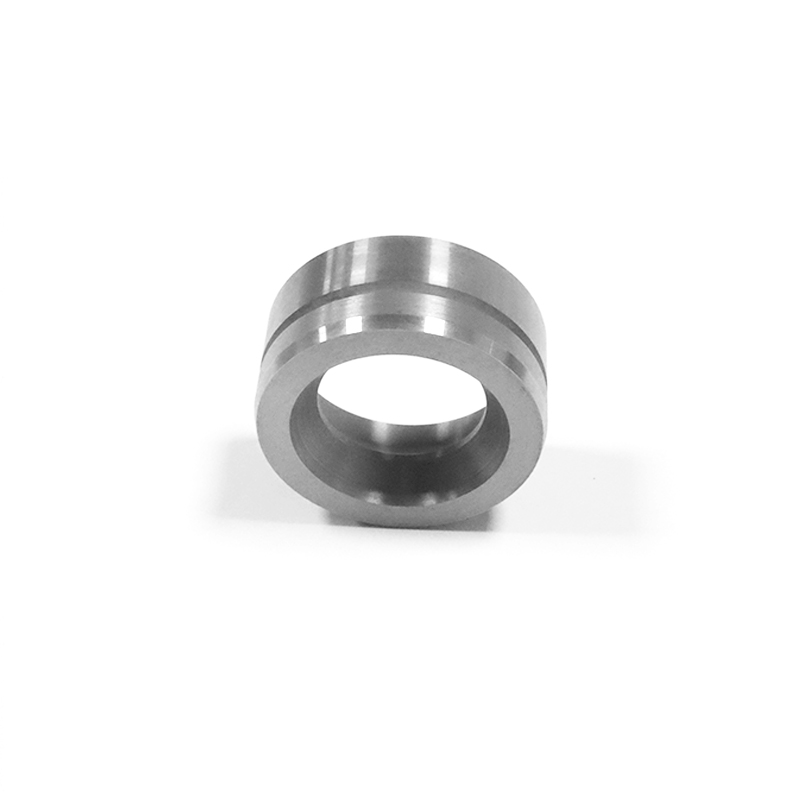
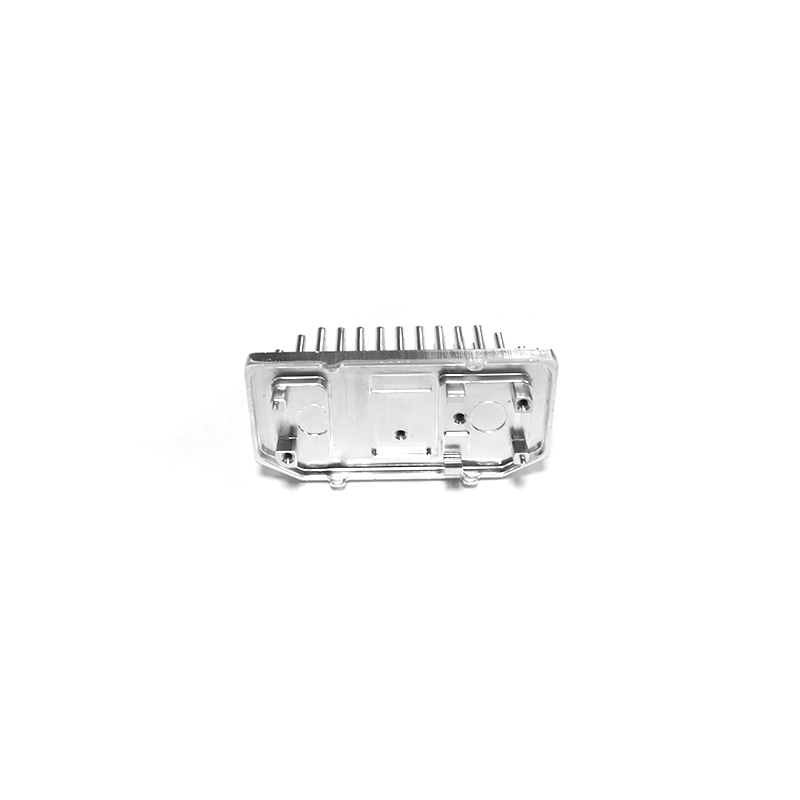
Quality assurance is the backbone of successful hot forging operations. At Shengpeng, we employ a multi-layered quality control system that begins with raw material verification and continues through every stage of production. Our 4 QA/QC inspectors utilize advanced coordinate measuring systems and digital tracking tools to ensure zero-defect delivery.
Our facility houses 14 advanced CNC lathes, five-axis machining centers, and high-precision punching machines. This diverse equipment portfolio allows us to handle complex geometries that simpler forging methods cannot achieve. For aerospace applications, our titanium alloy 5-axis machining achieves tolerances of ±0.01mm, while medical device manufacturing benefits from mirror polishing (Ra≤0.1μm) for biocompatibility.
Since implementing our Industry 4.0 digital quality tracking system in 2020, we've achieved full production process traceability. Every component can be traced back to its raw material batch, processing parameters, and inspection results. This transparency not only satisfies auditor requirements but also helps you troubleshoot any field issues efficiently.
We offer integrated surface treatment services including anodizing, electroplating, and polishing. This single-source approach eliminates supply chain fragmentation and ensures consistent quality across all finishing stages. Our zinc-nickel electroplating processes have demonstrated salt spray resistance capabilities that exceed industry standards for harsh environment applications.
Choosing the right supplier for hot forging services is a strategic decision that affects your product's longevity, cost structure, and market competitiveness. Here are the critical factors procurement teams should evaluate when selecting a manufacturing partner.
Verify the supplier's equipment range and expertise. Look for companies with multi-process capabilities—from forging to precision machining to surface treatment. A supplier like Shengpeng, which offers both hot forging and CNC machining under one roof, reduces coordination complexity and ensures tighter dimensional control.
Ensure the supplier holds relevant certifications for your target market. ISO 9001 demonstrates systematic quality management, while CE and RoHS certifications are essential for European markets. Request documentation of their EU inspection reports and verify certificate validity dates before committing to orders.
Evaluate the supplier's ability to handle varying order volumes. Fast sampling cycles (typically 7-15 days) enable rapid prototyping, while stable monthly output capacity (30,000-40,000 pieces) ensures scalability. Low MOQ options allow you to test new designs without significant financial commitment.
Ask about their inspection protocols and measurement technology. Suppliers using CMM (Coordinate Measuring Machines) and digital tracking systems provide higher confidence in dimensional accuracy. Inquire about their defect resolution procedures and warranty policies for production-related issues.
Use this comprehensive checklist to evaluate potential hot forging suppliers and ensure your procurement decisions align with your quality and delivery requirements.
Based on industry analysis and buyer feedback, here are key recommendations for sourcing hot forging services that balance quality, cost, and reliability.
Choose suppliers offering end-to-end solutions from forging to finishing. This approach minimizes interface risks and ensures consistent quality control across all manufacturing stages. Companies with R&D teams can also provide valuable DFM (Design for Manufacturability) insights during the quoting phase.
Prioritize suppliers using digital quality tracking and online ordering portals. These technologies provide transparency, faster response times, and better data for continuous improvement. Digital transformation indicates a forward-thinking approach to customer service and operational efficiency.
For demanding applications like medical devices or aerospace components, seek suppliers with specialized expertise in those industries. Their experience with specific materials (titanium alloys, biocompatible stainless steels) and regulatory requirements adds significant value beyond basic manufacturing capability.
Dongguan Shengpeng Precision Technology Co., Ltd. exemplifies the ideal hot forging partner with their combination of advanced equipment, international certifications, and global export experience. Their 6+ years of serving markets in North America, South America, and Eastern Europe demonstrates reliable cross-border operations capability.
Hot forging technology serves diverse industries requiring high-strength, durable components. Understanding these applications helps buyers identify suppliers with relevant expertise for their specific sector.
Critical safety components like crankshafts, connecting rods, and steering knuckles rely on hot forging for their superior fatigue resistance. Modern vehicles increasingly use forged aluminum components to reduce weight while maintaining strength, supporting fuel efficiency and emissions reduction goals.
Aircraft engine components, landing gear parts, and structural fittings demand the highest quality standards. Titanium and nickel-based superalloy forgings withstand extreme temperatures and stresses. Our 5-axis machining capabilities support complex aerospace geometries with micron-level precision.
Surgical instruments, implant components, and robotic surgery parts require biocompatible materials and ultra-fine surface finishes. Hot forging followed by precision machining creates complex shapes with excellent mechanical properties suitable for human contact applications.
Heavy-duty gears, hydraulic components, and power transmission parts benefit from the grain flow optimization that hot forging provides. These applications demand long-term reliability under continuous stress, making forged components cost-effective over their lifecycle despite higher initial costs.
Robotic joints, actuators, and precision mounting brackets require tight tolerances and repeatability. The combination of forging strength and CNC precision enables lightweight yet robust components essential for modern automation systems.
High-end sporting goods, bicycle components, and luxury accessories increasingly use forged aluminum for its strength-to-weight ratio and aesthetic appeal. Surface treatments like anodizing provide both durability and visual customization options.
Procuring hot forged components presents unique challenges. Understanding these common issues helps buyers avoid costly mistakes and establish more effective supplier relationships.
Dimensional variation often stems from die wear, temperature fluctuations, or inconsistent material properties. To mitigate this, work with suppliers using digital quality tracking systems that monitor each production parameter. Request statistical process control (SPC) data showing dimensional stability across batches. Regular die maintenance schedules and temperature-controlled furnaces are essential indicators of a mature operation.
Surface defects may result from improper forging temperatures, inadequate material preparation, or contamination during handling. Choose suppliers with integrated surface treatment capabilities who can address these issues proactively. Ask about their incoming material inspection protocols and ask for examples of how they resolve surface quality complaints.
Lead time variations reflect differences in equipment utilization, quality control thoroughness, and supply chain integration. Suppliers with dedicated forging lines and in-house machining typically offer more predictable timelines. Those relying on external subcontractors face coordination delays. Request detailed production schedules during the quoting phase and clarify what factors might impact delivery dates.
Many suppliers inflate capacity figures to win business. Request evidence such as equipment lists with model numbers, recent production photos, or third-party audit reports. Calculate their theoretical capacity based on machine count, operating hours, and cycle times. Compare this against their stated monthly output—if discrepancies exist, proceed with caution. Established suppliers like Shengpeng can provide verifiable metrics backed by actual export volumes.
Certified suppliers should provide material certificates, first article inspection reports, dimensional inspection records, and surface treatment verification documents. For regulated industries, request process qualification records and equipment calibration certificates. Their ISO 9001 documentation should reference specific control points for forging parameters. Don't hesitate to ask for sample documentation packages during supplier evaluation.
Reworking forged components depends on the nature of the defect and material type. Minor dimensional adjustments may be possible through additional machining, but structural defects usually require part replacement. Reputable suppliers will stand behind their products with clear remanufacturing policies. Shengpeng's commitment to remanufacturing production-caused defects demonstrates confidence in their quality systems and protects your investment.
CONTACT US


Privacy statement: Your privacy is very important to Us. Our company promises not to disclose your personal information to any external company with out your explicit permission.
Fill in more information so that we can get in touch with you faster
Privacy statement: Your privacy is very important to Us. Our company promises not to disclose your personal information to any external company with out your explicit permission.